
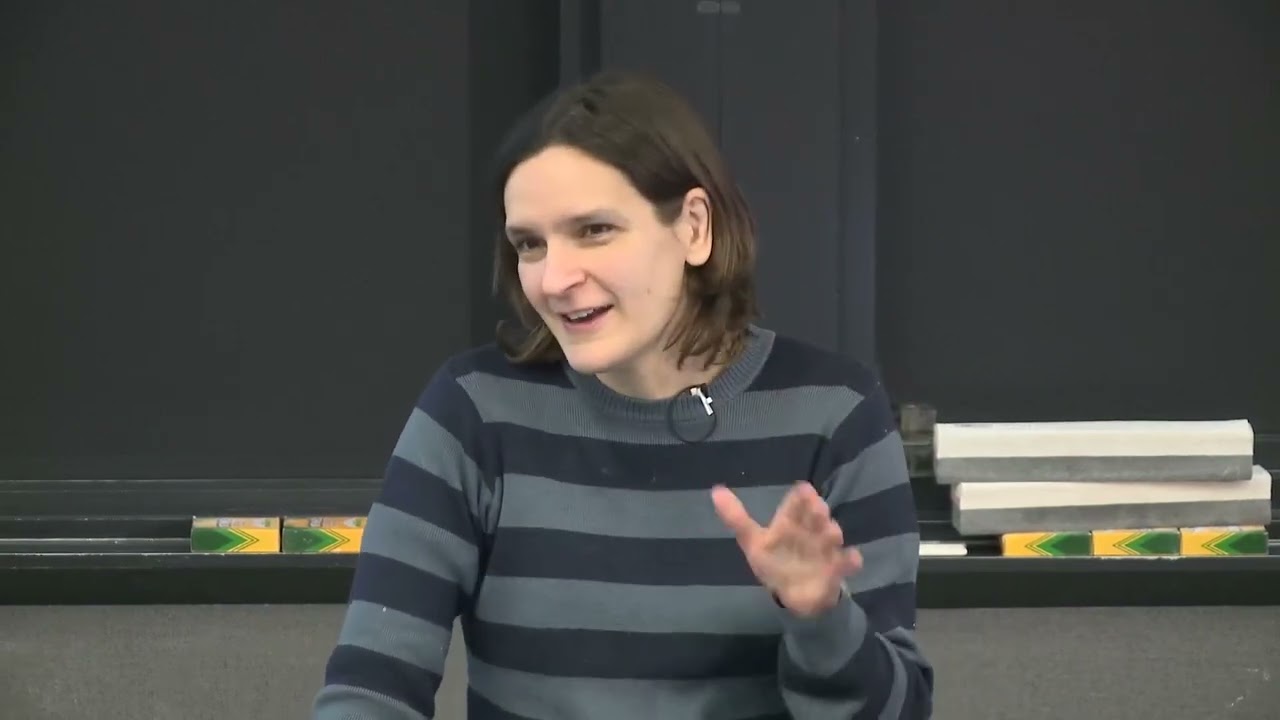
This course introduces methods for harnessing data to answer questions of cultural, social, economic, and policy interest. We will start with essential notions of probability and statistics. We will proceed to cover techniques in modern data analysis: regression and econometrics, design of experiments, randomized control trials (and A/B testing), machine learning, and data visualization.
Course Features
- Lectures 22
- Quiz 0
- Duration 10 weeks
- Skill level All levels
- Language English
- Students 30
- Assessments Yes
Curriculum
- 1 Section
- 22 Lessons
- 10 Weeks
Expand all sectionsCollapse all sections
- Data Analysis22
- 1.1Lecture 01: Introduction to 14.310x Data Analysis for Social Scientists
- 1.2Lecture 02: Fundamentals of Probability
- 1.3Lecture 03: Random Variables, Distributions, and Joint Distributions
- 1.4Lecture 04: Gathering and Collecting Data
- 1.5Lecture 05: Summarizing and Describing Data
- 1.6Lecture 06: Joint, Marginal, and Conditional Distributions
- 1.7Lecture 07: Functions of Random Variables
- 1.8Lecture 09: Expectation, Variance, and Introduction to Regression
- 1.9Lecture 10: Special Distributions
- 1.10Lecture 11: Special Distributions, continued. The Sample Mean, Central Limit Theorem, and Estimation
- 1.11Lecture 12: Assessing and Deriving Estimators
- 1.12Lecture 13. Confidence Intervals, Hypothesis Testing, and Power Calculations
- 1.13Lecture 14: Causality
- 1.14Lecture 15: Analyzing Randomized Experiments
- 1.15Lecture 16: (More) Explanatory Data Analysis: Nonparametric Comparisons and Regressions
- 1.16Lecture 17: The Linear Model
- 1.17Lecture 18: The Multivariate Model
- 1.18Lecture 19: Practical Issues in Running Regressions
- 1.19Lecture 20: Omitted Variable Bias
- 1.20Lecture 21: Endogeneity and Instrument Variables
- 1.21Lecture 22: Experimental Design
- 1.22Lecture 23: Visualizing Data